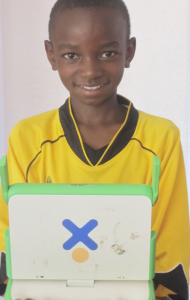
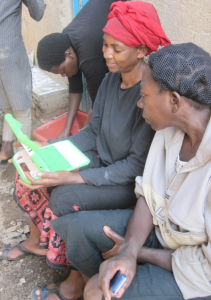
New Scientist interviews Nicholas about the no-intervention literacy experiment

Vijaysree Venkatraman of the New Scientist interview Nicholas about the pilot experiment to see how access to a tablet with books and appropriate software can help children learn in the absence of structured intervention (like an enforced class at a school).   They cover the potential sites for the eventual project, and the pre-pilot beginning next month.

It’s offers a quick overview of the effort, from the audience (5-8 yr olds) to infrastructure and power issues, to the timeline for assessment of the results (2 years).   Sugata Mitra is helping designing the minimally invasive pilots and will oversee the one in India.

Piedmont School District in Alabama on their 1:1 laptop program

Matt Akin, superintendent of the Piedmont City Schools (not far from Birmingham), talks about their long-running 1:1 Mpower program, working with Stanford and iTunes U, partnership with the entire local community, and the impact on the students.   They have three K-12 schools in the district, and children take laptops home with them starting in Grade 4.

“every student at Piedmont has the opportunity of taking French, German, or Chinese, instead of just taking Spanish. And if they want to get ahead, they can take two years in one.

Our students pay a $50 insurance fee. If they’re low income and they can’t afford the fee, we feel strongly that everyone should have something invested, so a student may pay $2 a month. 

I contacted the professor at Stanford because I think the videos are probably three or four years old and said, “It sure would be nice if we could have your stuff.” He sent us all his PowerPoints, his coding requirements, and solutions.

A great interview by Stephen Noonoo.  (Is it wrong of me to want to CamelCase his last name?)  Encore!

Rwandan OLPC mentors: students with business cards

Back in May, we held an international Scratch Day event in our office called “Rwandese Kids Scratching their Communities.” This event had local students familiar with Scratch, an interactive programming activity on the XO laptop, planning and holding their own workshop. They taught teachers, family members and anyone else who came how to create Scratch projects.

This day was open to all and many new children found their way into our offices to learn more about Scratch and the XO laptop. Two such boys were Joseph (grade 3, 10 yrs old) and Erize (grade 2, 11 yrs old).

In the months that followed, Joseph and Erize kept coming to our offices (near
their houses) to use the laptops. During this time, they not only mastered use of the laptop, they spread word to their friends, and now help and guide other children who have begun coming to the office. Their homes have become popular places with family and friends coming each night to learn more and use the laptops.

The boys had been reserved and quiet, but are now outgoing and confident. Their English has expanded from a few sentences to conversational in just a few weeks. It is clear their work with the laptop has empowered them. They are so happy to be involved with OLPC, that they have each created their own business card and tell everyone in the neighborhood that they work for OLPC!

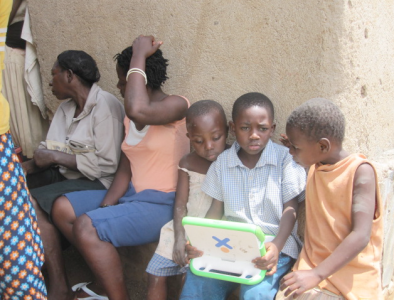
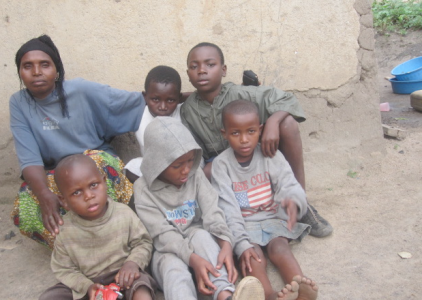
Joseph and Erize, on their own, chronicled through pictures an afternoon of themselves and their families at home with their laptops:

Visualizing universal connectivity in Argentina

Argentina’s Conectar Igualdad program, which will provide 3M laptops to secondary students across the country by the end of next year, has devoted much time to their web presence.  (The secondary students receive Classmates; 60K primary students in the north have also recieved XOs.) The national education ministry has a history of excellent web sites, including educ.ar, which has gathered learning materials and information for teachers for years.

Conectar Igualdad has, among other things, a lovely real-time summary of the program’s progress, noting the current targets or the deployment and how it has progressed during the current phase in each district.

They are also open about the experimental nature of their work.  They have asked students and communities to come up with great ideas and local initiatives using the laptops and other information technology, running a variety of contests to select the best of them.  The aim of these contests is to highlight the dynamic of “one laptop per child” and universal connectivity, connect with web 2.0 services, and to collaborate with others in a creative way.

Continue reading →

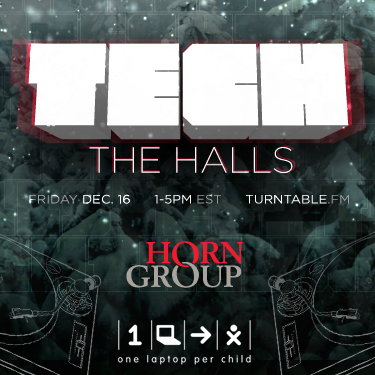
Tech the Halls: DJ showdown to support OLPC work with disabled children

No, this isn’t the brainchild of DJ XO… he’s not even eligible to compete.

This is a virtual DJ battle hosted by turntable.fm as a benefit event for OLPC, with donations accepted through crowdrise.

The contenders will be tech media figures (and amateur DJs) still to be named — though a few have already started tweeting about it!  The matchups will be posted next week and they will face off on December 16, from 1-5pm EST.  Money raised through the event will be donated to OLPC in the name of the winner, and will support getting XOs to disabled children in the US.


Uruguay’s Plan Ceibal has already made great strides in XO accessibility for the disabled, and we are beginning to build on their work with children in the US; this funddrive will provide laptops for the first group of children.

So mark your calendars, come enjoy the virtual turntables and support your favorite DJ on December 16! Thanks to the Horn Group and ttfm for making this happen.


OLPC Asia team visits Sichuan school, updates their XOs

Last week twenty volunteers joined the OLPC Asia team to return to the OLPC pilot school in Sichuan.  OLPC donated 1000 XOs to children and teachers at the school, which supports students whose schools were destroyed by the 2008 earthquake.  The visitors spent a few days at the school, meeting with the school community and helping them update and repair their machines. Here’s a snapshot of them at work: