Archive for OLPC

OLPC and Knight Foundation launch digital literacy program in Miami school


This semester, the Knight Foundation and One Laptop Per Child are launching a digital literacy effort at Liberty City’s Holmes Elementary School. Video from the school is up on Vimeo. And here is the joint press release:

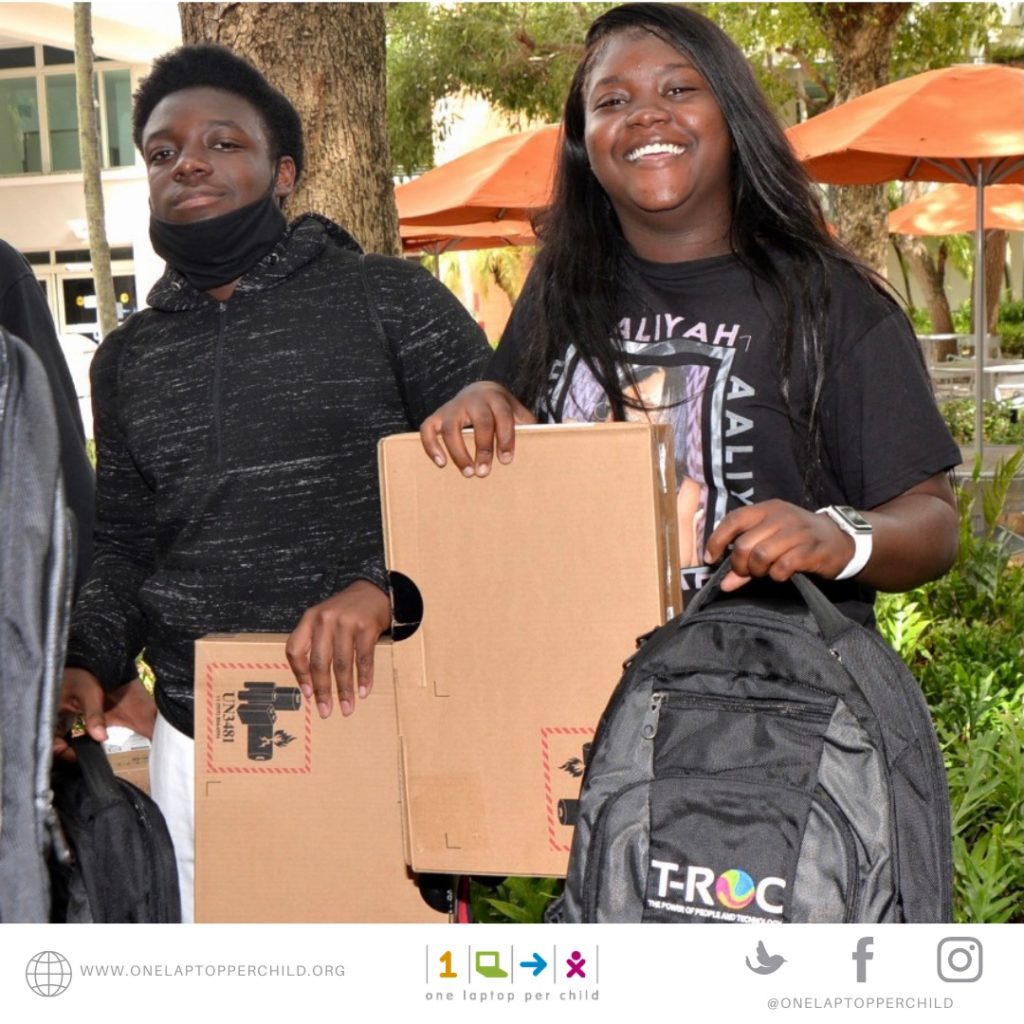
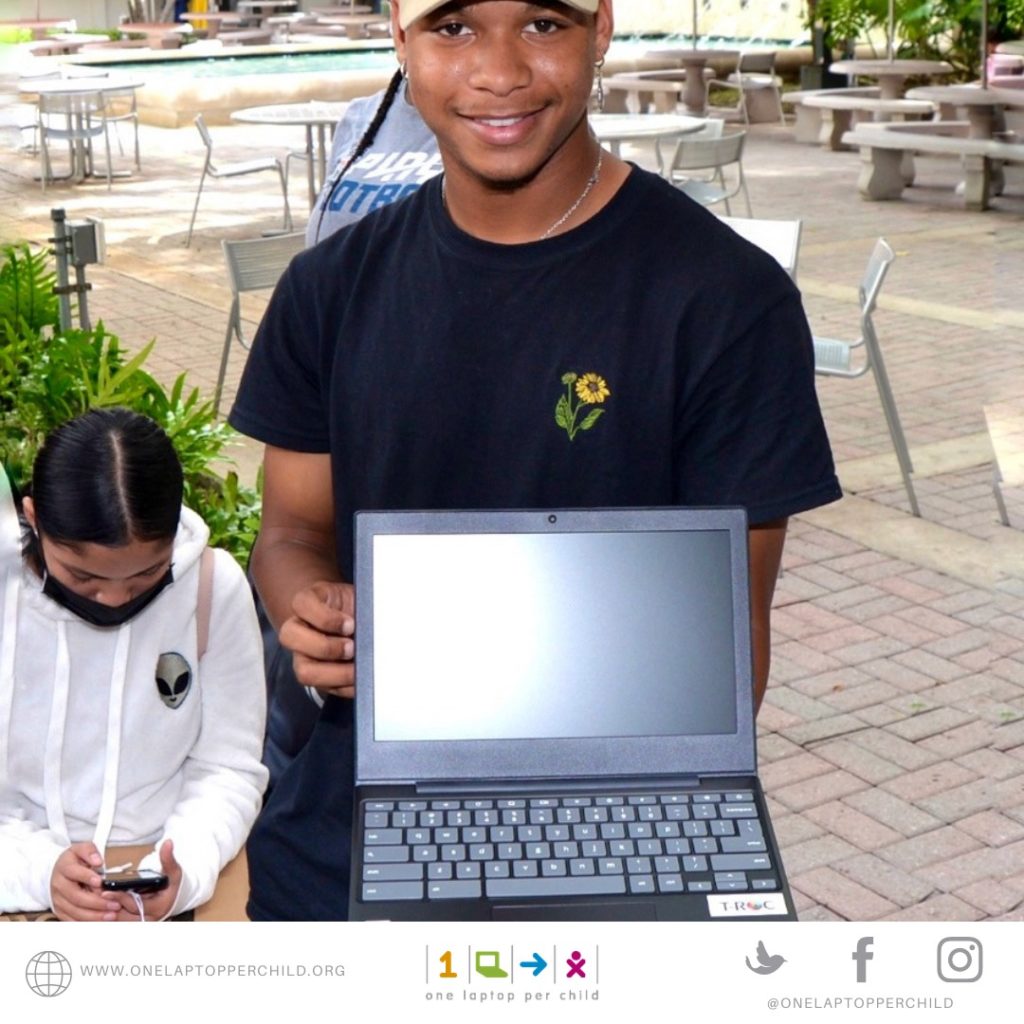
Every student will receive their own XO laptop today, in an effort to level the digital playing field for more than 525 kids at the school. The XOs will be provided by OLPC, with $245K in support from the Knight Foundation.  Community advocates will present the laptops at 9:30 a.m. today.

“Access to the Internet and digital skills are vital for success in today’s connected world,” said Jorge Martinez, who leads Knight Foundation’s Universal Access Initiative. “We hope the laptops help these eager young minds at Holmes Elementary to become digital natives who are more informed and engaged in their classrooms and their community.”

OLPC will provide in-house training at the school for parents, teachers and students on how to use the computers to advance students’ learning. The laptops have tools that let students and teachers to work more closely together. Students can follow their teacher’s work on their laptop, or work collaboratively on projects. OLPC is also assisting in creating a localized curriculum to help kids meet their academic benchmarks.

“We are pleased to be working with Knight Foundation and the Miami-Dade County public schools on this new OLPC education initiative in the U.S.,” said Rodrigo Arboleda, chairman and CEO of the OLPC Association.  ”We believe that partnering with foundations, the private sector and the public sector is an excellent model that can be replicated across the country.”

Holmes Elementary School, which serves the majority of Liberty City residents, is at risk of closing at the end of the year if its state test scores do not improve. In an effort to boost performance, a variety of tools and resources are being used to enhance teaching and learning, including the laptops and training program.

“With this project, every child will carry learning in the palm of their hands and we will be one step closer to leveling the educational playing field in Miami,” said Atunya Walker, Holmes Elementary School’s principal. Holmes Elementary has been selected because it is already working with Knight-funded Teach For America to change student performance. Knight provided funding to triple the amount of Teach for America teachers in Miami-Dade – bringing the number to 350 – in a group of inner city schools that includes Holmes.

See the video about this project.

There are natural assessments built into the program, with a fairly short timeframe, thanks to existing conditions at the school and their risk of closure. And I am honored by the involvement of the Knight Foundation, which has been thinking about issues of access to tools and information in the US for a long time.

Comments (3)

Rodrigo visits Colombia; Physics in Sudan

Sandra Barragán posted a photoset from Rodrigo’s visit to Colombia yesterday.

And the Fargo team develops some game-like projects around Physics and Etoys.

Comments

Betty Crocker helps kids give back through OLPC

General Mills is reprising their “Win and Give” program from last year to help kids win an XO laptop and give one to a child in an African deployment. Last year this resulted in almost 1000 donated laptops.

From now through May, specially-marked packages of Betty Crocker fruit snacks will feature a “Win & Give” campaign, giving people a chance to win laptops themselves and donate laptops to children in Africa.

The campaign shows moms and kids that even the smallest act can make a big difference, and that giving to others can be fun. “Research shows that providing children with opportunities and experiences to feel the joy and impact of giving to others helps them grow into kind, empathetic and respectful adults,” said Dr. Michele Borba*. “The ‘Win & Give’ campaign truly makes a difference and it’s so easy for kids in the U.S. to get involved.”

Having a giving heart is important, as 93 percent of moms would exude more pride if their children grew into giving adults than if they were wealthy, according to the Kids’ Altruism Indicator**. But, between work, school and after-school activities, it can be hard for families to find the time to give back. Dr. Borba recommends five ways families can incorporate giving into their everyday lives: Tap into kids’ passions. For instance, an animal lover may get excited about helping at a local animal shelter. Encourage children to become involved in causes they care about. Let them lead the charge and follow-up with support. When watching the news, take the time to explain hot button issues and how people have been affected by local disasters, like hurricanes or tornados.

Kids are compassionate and may proactively want to help by donating clothes or writing letters to those affected. Especially when they know they can make a difference. Take that moment to mobilize compassion – “What can we do?” is a great question that empowers children to lead the way. Be on the lookout for local opportunities to help.

Each package contains a code that can be entered at WinOneGiveOne.com to see if they’ve won an XO laptop; for every laptop one, another is donated to a child in Africa.  The website allows parents and kids to see the impact laptops have on kids in Rwanda with videos from the students and teachers who received the laptops, and includes tips and comments from Dr. Borba.


* Michele Borba is an educator, author, and parenting expert working with General Mills.
** The Kids Altruism Indicator survey was conducted by Kelton Research in December 2010, among children ages 7-12.

Comments (2)

Update from OLPC Jamaica in August Town

Reposting a recent update by Jamaica’s Craig Perue

I have very good news. Just in time for the one year celebration of the launch of our XO deployments at August Town Primary and Providence Methodist Basic School, six members of the global OLPC community will be visiting us. They will be taking lots of pictures, doing interviews, workshop sessions, meeting the parents, teachers and students – all during the week of January 29 to February 5. One of the goals while they are here is to collect lots of content – National Geographic quality pictures and amazing stories that will be published later in the year along with those of five other small OLPC deployments worldwide.

This is an initiative to publicize to a worldwide audience the great OLPC work being done in Jamaica, Madagascar (Nosy Komba), Philippines, Kenya, Haiti, and Vietnam.

The team visiting Jamaica includes:

- documentary film maker, Bill Stelzer, who works with the OLPC deployments in the US Virgin Islands
- OLPC’s community support manager since 2007, Adam Holt, who splits his time between Boston and Haiti
- executive director of Ntugi Group, Mark Battley, who support OLPC implementations in Northern Kenya
- Quentin Peries Joly and Laura de Reynal, University students from OLPC France who have done extensive work with the OLPC project in Nosy Komba, Madagascar
- Nancie Severs, who envisioned and started the first OLPC deployment in a floating village, Vietnam.

Comments (1)

Low-power solutions: energy harvesting and cultural implications

Last November, Richard Smith gave a talk on potential power sources for OLPC at the Energy Harvesting USA conference.

Ars Technica recently reviewed the XO-3 and XO-1.75 with an eye towards the future implications of low-power computing, discussing power generation by hand, by bike, and by water wheel as well as through solar panels.

Of course we’re not done with the low-power revolution; phones and computers – even the latest XOs – are still too power hungry to be quickly and easily charged by ambient light (as solar calculators are) or by hand (despite the simplicity of hand cranks, legs are much better suited for generating power than arms and hands). So while alternate charging works it requires explicit attention and preparation.

But in places without electrical infrastructure that have some steady source of power, computers and computing can increasingly be part of everyday life.

Comments

An XO-1.75 running directly off a solar panel (video)

Richard Smith recently answered questions about the XO-3 power requirements, with an illuminating video of the similar XO-1.75 running directly off a 10W solar panel (without a battery).  Below is his update to olpc’s devel mailing-list:

> Q: What are the XO-3 power consumption and charging requirements?

It’s still too early to lay out exact claims for this. These are A1 prototypes. This is the stage where we start finding all the things that use more power than we would like, and reduce them. The exact size of the battery is also changing as we maximize the space in the battery cavities.

We won’t make exact claims on power until it moves well into B- and C-series builds. That said, a lot of internals are almost identical to the 1.75, so things I’ve previously said about 1.75 are a good approximation of the XO-3.

  • The traditional display consumes more power than the Pixel-Qi.
  • The maximum runtime power draw of the 1.75 is 5W. (Not including the extra 5W you can draw from the USB port.)
  • The power input front end of the XO-3 is identical to the XO-1.75 and XO-1.5: an 11V-25V input range and a maximum input rating of 25W.
  • The XO-3 can also be powered by USB OTG (On-The-Go).
  • The XO-3 would survive long term if you connected it directly to a car/motorcycle 12V power system (with no adapter).
    (I don’t think any other tablet made so far could say that.)

Here’s a video showing a 1.75 powered completely by our 10W PV panel.  This is a raw panel, with no power controller or internal battery; there is no battery in the XO. The laptop has suspension turned off. Chris Ball and I shot it yesterday, on a sunny winter day in Cambridge.  More notes and details below, for the power geeks.

Unlike the XO-1.5 the XO-1.75 almost never gets to the 25W maximum because its runtime power is much lower. So peak power draw only happens when charging a very low battery.

OTG has a strict 5V/7.5W power specification so charging via OTG will take longer. No, I’ve not yet measured how much longer. :) Sadly its not a nice linear thing that you can just do the math and figure out. There are many variables some of which will change with the next prototypes.

Having a robust, wide voltage range, high power input is an important feature when using alternative power sources. Alternative power can be very unclean and very sporadic. You must be very forgiving on what you allow and when its available you want to maximize your input.

> Has it been demonstrated to be chargeable by “solar panels,
> hand cranks
cranks and other alternative power sources?”
> [Sources] not requiring systems that cost more than the laptop,
> nor someone with XO-green skin color to crank?

The claim of being chargeable by alternate power sources isn’t new.  Every XO generation we have made to date matches this claim, and in each generation we make an improvement.

It’s always been possible to charge an XO from alternative power sources. Sites in Rwanda, Peru, Haiti and the Solomon Islands (just to name a few) are powered entirely by solar. These use XO-1′s and XO-1.5′s. Some use a commercial-type solar system and some are just solar panels that connect directly to the XOs.  Read more:

Read the rest of this entry »

Comments (7)

Why we need OLPC in the US (img)

One question from a CBS News poll of 951 adults nationwide:

Over 1/4 of Americans polled estimated the national population at 1 billion

Comments (3)

XO-3 Press roundup

Updated Wednesday with more tech and design coverage.

A quick summary of the latest 250 articles about the XO-3 launch (updating regularly; links welcome in comments):


The VergeXO 3.0 tablet photos and video
GizmodoHands on with the $100 wonder tablet
Ars TechnicaCharging by crank, bicycle, and waterwheel

MSM:
FT – first video look
Forbes – tablets solar kinetic chargers
Telegraph – xo-3 unveiled
WSJ – olpc says…
IBT – steve jobs (!)
Sac Bee – marvell and olpc
Register – xo tablet android linux

Gadgets/computing:
OLPC.TV – xo-3 unveiled
Liliputing – olpc to introduce
Engadget – xo 3.0 hands on
Slashdot – xo-3 but not for
Slashgear – xo-3 hands on
Mashable – olpc tablet
T3 – xo3 tablet
Gizmodo – first images
Wired gadget – olpt finally (video)
PCMag – article
LaptopMag – 6 min of hand crank
CNET – tablet to launch
Digital Trends – show off tablet
GigaOm – offgrid clean power solar

Education:
Education Week – low-cost tablet debuts
Tech 4 Teachers – xo-3 tablet
Edudemic – replace ipad in classroom
New Scientist – one percent: OLPC

Design:
FastCo Design – fuseproject third-gen olpc
Dexigner – yves behar unveils
Design Week – behar tablet

Other blogs and mags:
Venture mag – ARM fuels
Market 2 Phones - olpc tablet

Italy:
indipedia.it
atcasa – il nuovo tablet per bambini

Portugal:
lerebooks.wordpress.com

Germany:
heise.de – gallery
computerbild.de

Comments (11)

Joanna Stern takes a detailed look at the XO-3

Joanna Stern, who has reviewed many OLPC models in the past, takes an in-depth look at the XO-3 prototype at CES, in a detailed review for The Verge. In addition to an excellent writeup, she interviews Ed McNierney while exploring the laptop in person, in what looks like Max Headroom’s office. They talk about everything from hardware and power to software and deployment.

They also took the best set of photos of the XO-3 and solar-cover to date!


Comments (1)

The XO-3 tablet is on display at CES

As foreshadowed 18 months ago, an XO-3 prototype is debuting at CES this weekend, and will be shown off next week at the Marvell booth. Here is a sneak peek at what it looks like:

If you are heading to CES, you can stop by and see it yourself! Ping Giulia to set up an appointment, or drop by the Marvell booth. Charbax of olpc.tv will be on site as always, recording some video and interviews.

The XO-3 will sport a 1024×768 Pixel Qi screen, half-gig of RAM, and a Marvell Armada PXA618 chip. Some of the soft cover designs proposed so far include a built-in solar panel. More updates coming over the next week; for now, here is our CES press release.

The XO-3 is still planned to enter production at the end of this year.

Comments (17)

OLPC and Marvell announce the XO-3 tablet

Also: The first Marvell ARMADA-powered XO 1.75 laptop will begin shipping in March to school children in Uruguay and Nicaragua

SANTA CLARA, Calif. / LAS VEGAS (Jan. 9, 2012) – Marvell Semiconductor (Nasdaq: MRVL), a worldwide leader in integrated silicon solutions, and One Laptop per Child, a non-profit organization dedicated to helping every child in the world gain access to a modern education, demonstrated a version of the much-anticipated XO 3.0 – a low-cost, low-power, rugged tablet computer designed for classrooms around the globe – at the 2012 International Consumer Electronics Show.

“We’re proud to introduce the XO 3.0 tablet, showcasing the design, durability and performance features that make it a natural successor for our current laptops, which have been distributed to more than 2.4 million children in 42 countries and in 25 languages,” said Ed McNierney, Chief Technology Officer of One Laptop per Child. “The XO 3.0 builds on many of the technology breakthroughs we made with the XO 1.75, including the use of the Marvell® ARMADA® PXA618 processor, resulting in a significant decrease in power consumption-a critical issue for students in the developing world.”

“Marvell is committed to improving education–and the human condition-around the world through innovative technology for Smartphones, tablets and a myriad of new cloud-delivered services. Partnering with One Laptop Per Child is one way we can deliver a revolution where it matters most-to benefit children in some of the poorest places on the planet,” said Tom Hayes, Vice President of Corporate Marketing at Marvell, and a member of the OLPC advisory board. “Marvell has been with One Laptop per Child from the start, and we’re doing whatever it takes to help the organization realize its mission of providing meaningful educational opportunities to the 500 million school-aged children around the world.”

Marvell and One Laptop per Child also announced today that the XO -1.75 laptop will begin shipping to customers in March 2012. Over 75,000 units of the XO 1.75 have already been ordered by OLPC projects in Uruguay and Nicaragua. Both models use the Marvell ARMADA PXA618 SOC processor, which doubles the performance of the earlier XO 1 while using only half the power. The XO 1.75 features a sunlight-readable screen, and all other features and design characteristics of the two previous versions of the XO laptop.

The XO 3.0 tablet will also feature the Avastar Wi-Fi system-on-chip.
It is also the only tablet that can be charged directly by solar panels, hand cranks and other alternative power sources

Other features include:

• Updated Pixel Qi sunlight-readable display
• Choice of Android or Linux operating systems
• Unique charging circuitry to support alternate power sources
• Choice of laptop covers, including one with built-in solar panel

Comments (8)

Colombia’s President Santos on quadrupling Internet access nationwide, and on rural OLPC success

Last November, President Juan Manuel Santos of Colombia gave the annual speech presenting the country’s National Competitiveness Report (pdf) – presented by the national Private Council for Competitiveness.

In his speech, he spends some time discussing his national plans for education, and recalls one of the great OLPC stories — the first OLPC program in Colombia in 2008, involving delivery by helicopter, no less, when Santos was Minister of National Defense. This took place in the town of Vista Hermosa, which at the time had recently been captured by government forces from the FARC.

Vista Hermosa students receive XOs in Dec. 2008

Here is the story in his own words. It is worth watching the original video; Santos is a good speaker. (The whole talk is fascinating; education starts at 26:25, the Vista Hermosa story is at 28:55.)

Excerpts after the jump. Read the rest of this entry »

Comments (2)

Happy New Year! Reflections on OLPC in 2011

As we prepare for 2012, here is a quick look back at the past year of OLPC. We distributed our two millionth laptop (now 2.5M), and our largest programs in Latin America (Peru) and Africa (Rwanda) grew steadily. Austria’s Julieta Rudich and Journeyman Pictures produced a fine documentary about Plan Ceibal in Uruguay (the world’s first complete olpc program), and Peru provided XOs and compatible robotics kits to all of their urban schools.

In East Africa, we expanded our work with African nations and donors to improve education for children across the continent. We were invited by both the African Union and the UN to open an OLPC office in Addis Ababa, Ethiopia. Addis is a major hub for African diplomacy, and the support there for our mission has been stunning. We have become a full partner of the East African Community in Tanzania, and our recent country report on Rwanda has driven further interest in the region.


A Rwandan student workshop in Kigali

In the Middle East, we continued working with the Palestinian Authority, Israel and the UN to provide thousands of Palestinian children with XO laptops, integrating them into schools. It took ten months to work the laptops through customs in Gaza. But at a forum in Ramallah in June, teachers from Bethlehem and Gaza showed how OLPC was helping to end isolation and to excite learning for their children. Third grade girls in refugee camps are teaching others and writing computer programs. The testimony of these women to the power of persistence was extraordinary.

In Afghanistan, we founded a regional OLPC Afghanistan office, and briefed General Petraeus on the project. We believe that one laptop per child and connectivity, across the country, will transform this generation and their communities. Today we are working with the Education Ministry to support four thousand children in 10 schools, and are looking into expanding in Herat Province.

On the technical side, we focused on driving down laptop power needs by switching over to ARM chips in the XO-1.75 and upcoming XO-3 tablet. The tablet should be chargable by a solar panel that could serve as its carrying-case. We are studying new ways to help children learn to read, including where there are no schools at all.

In society, the idea that every child should have access to their own computer and to the Web – as a basic part of learning, whatever their family income – continued to spread. In addition to ongoing national programs in Argentina, Portugal, and Venezuela (for secondary students), two full-saturation laptop programs for older students are developing in India – an inexpensive tablet is being distributed to university students, and in Tamil Nadu dual-boot laptops from six different manufacturers are being provided to secondary students.

Reaching the least-developed countries in the world remains our goal and our most difficult challenge. While our largest deployments are funded directly by implementing governments, rural successes may be driven by foundations, NGOs, and individual donations. OLPC Rwanda, today one of the largest educational technology projects in Africa and part of a ten-year government plan, was seeded with ten thousand laptops given by Give One, Get One donors.

So to our supporters: thank you for your development, contributions, and collaboration, your feedback from the field, and your encouragement! This is all possible thanks to you.

Happy New Year to all — may 2012 bring you inspiration and discovery. We have some excellent surprises planned for the new year. And we would love to hear your reflections as well — please share stories from your own school projects in 2011.

Comments (2)

The laptop that will save the world, revisited

Jeff Shear composed a thoughtful retrospective on OLPC.

Comments

John Constine rules the turntable; Y&R supports OLPC

Tech Crunch star John Constine last week took the prize in the Tech the Halls contest, beating out Kunur Patel and Sam Biddle. $10K was donated to us on his behalf — thanks, John! You rock.

And marketing mastermind Young & Rubicam chose us as one of three charities to support this year in their season’s outreach to clients, some of whom have also supported us directly through a custom donation page.

While we are honored by our many corporate donors throughout the year, it is especially delightful to work with those who make the donation a learning process and a discussion with their own communities. A very constructionist way to give. Happy holidays!

Comments

A successful Contributors Program project: Rehnuma School in Karachi

If you haven’t seen this blog and this YouTube video from the OLPC Contributors Program project run by Talat Kahn and Carol Ruth Silver in Pakistan, you need to check it out! Watch the video and explore some of the creative ways the teachers and students are using XOs in their school.

This began as a 10 XO Contributors Program project and I was privileged to be their mentor. (Since then they found funding for over 100 XOs and are looking to grow.) And their class experiences and blog have been an inspiration to other teachers around the world. I did give them some help getting started and a couple of “lessons” via Skype, but after that, they ran with it! Notice the enthusiastic local community involvement that has helped make this project the success that it is.

P.S. Carol and Talat are members of the OLPC San Francisco Community. They are also the ones that introduced many of us (myself included) to the Khan Academy videos. We all learn from each other!

Comments

Miguel Brechner on technology and teachers

Miguel Brechner, the compelling head of Plan Ceibal, gives a talk about the impact of the Uruguayan program, which has now reached almost 500,000 children and teachers in the country. He discusses impacts on the lives of children, plans for the future, and empowering teachers. (He also seems to be experiencing a revelation of epic proportions in the opening sequence of this video.)

Presentation, Part 1 | Part 2

From his talk:

There is no magic here. Ceibal will not solve Uruguay’s problems, but it is a technology that can help us solve them.

En Uruguay hay dos banderas: la primera la selección uruguaya de fútbol, y la segunda el Plan Ceibal.

Comments (1)

« Previous entries Next Page » Next Page »